Earth's Biodiversity Boom: Over 16,000 New Species Discovered Annually, Scientists Reveal
Scientists are discovering over 16,000 new species annually, revealing a far more biodiverse planet than previously understood. These findings not only challenge existing scientific knowledge but also highlight the critical importance of continued environmental research and conservation.
Imagine an intergalactic spacecraft arriving on our planet, curious about the diversity of life inhabiting Earth. This wasn't just a whimsical scenario, but a serious scientific thought experiment posed by renowned Australian ecologist Robert May fifteen years ago in Science magazine, challenging researchers to understand the true breadth of our planet's biological richness.
According to groundbreaking research from the University of Arizona, that spacecraft would discover an astonishingly vibrant world. Professor John Wiens and his research team have revealed that scientists are currently identifying an average of 16,000 new species each year, a rate that far exceeds previous expectations and challenges assumptions about global biodiversity.
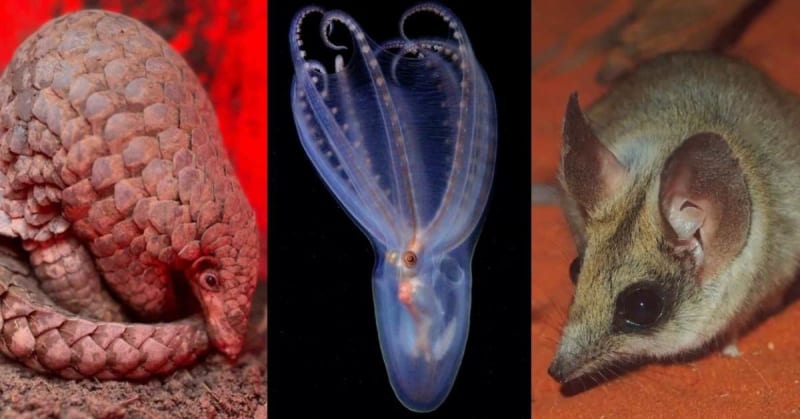
The comprehensive study, conducted with co-authors Xin Li, Ding Yang, and Liang Wang, analyzed taxonomic records of approximately 2 million species. Their findings demonstrate that these newly discovered species aren't just microscopic organisms, but include a diverse range of life forms: insects, plants, fungi, and even hundreds of previously unknown vertebrates.
While current scientific knowledge recognizes about 2.5 million species, researchers believe the true number could range from the tens of millions to potentially low billions. This revelation challenges the notion that we are running out of species to discover, instead suggesting we are uncovering new life forms at an unprecedented rate.
Critically, Wiens emphasizes that discovering these species is more than an academic exercise. 'Documentation is the first step in conservation,' he explained. 'We can't safeguard a species from extinction if we don't know it exists.' In a companion study, Wiens and colleague Kristen Saban found that the rate of new species discovery significantly outpaces extinction, with only approximately 10 species going extinct annually.
Beyond conservation, these discoveries hold immense potential for human advancement. Many newly identified species contain remarkable substances with potential medical applications. Spider and snake venoms, along with unique plant and fungal compounds, are already showing promise in treating complex conditions like pain and cancer. 'We're still just scratching the surface of what these species can do for humanity,' Wiens noted, highlighting the profound impact of biodiversity research.
This exciting research doesn't diminish the importance of environmental protection efforts. If anything, it underscores the critical need to continue exploring, documenting, and preserving the rich tapestry of life on our planet. As scientists continue to uncover new species, they remind us that Earth remains a world of endless wonder and unexpected discoveries.
Based on reporting by Good Good Good
This story was written by BrightWire based on verified news reports.
More Good News
 🌍 Planet
Innovative Solar Solution: ZOUPW 450W Portable Panel Revolutionizes Off-Grid Power Generation
 🌍 Planet
Conservation or Displacement? The Complex Story of Tanzania's Game Reserves
 🌍 Planet
Electric Vehicle Giants BYD and Tesla Dominate Global Battery Electric Vehicle Market
Start Your Day With Good News
Join 50,000+ readers who wake up to stories that inspire. Delivered fresh every morning.
No spam, ever. Unsubscribe anytime.