Cosmic Discovery: 400 Rings Reveal Star Formation Secrets in Stunning Space Photo
In a stunning breakthrough, astronomers have uncovered 400 cosmic rings in the Perseus constellation, revealing the hidden mechanisms of star birth. This remarkable discovery provides an unprecedented glimpse into the explosive and dynamic process of stellar formation.
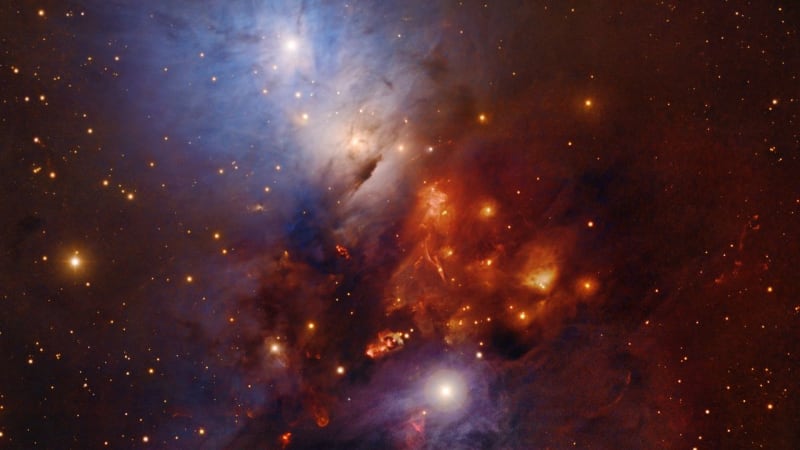
In the vast, mysterious depths of the Perseus constellation, astronomers have uncovered a breathtaking celestial story that challenges our understanding of how stars are born. Just 1,000 light-years from Earth, a remarkable reflection nebula named NGC 1333 - nicknamed the 'Embryo Nebula' - has unveiled an extraordinary glimpse into the explosive birth of new stars.
Using the powerful Atacama Large Millimeter/submillimeter Array (ALMA) radio telescope in Chile, researchers have captured the most detailed images ever of a young star's jet system, revealing over 400 ultra-thin, bow-shaped molecular rings that serve as a cosmic timeline. These intricate rings, similar to tree rings marking the passage of time, provide an unprecedented window into the dynamic processes of stellar formation.
The study, published in Nature Astronomy on December 16, focuses on the binary star system SVS 13, which has been a mystery to scientists for decades. By meticulously examining the jet emissions from a young star within this system, researchers discovered something remarkable: each ring represents a distinct moment of energetic outburst, with the youngest ring precisely matching a bright stellar event from the early 1990s.
'These images give us a completely new way of reading a young star's history,' explained Gary Fuller, study co-author and professor at the University of Manchester. 'Each group of rings is effectively a time-stamp of a past eruption. It gives us an important new insight into how young stars grow and how their developing planetary systems are shaped.'
The discovery marks the first direct observational confirmation of a long-standing theoretical model explaining how young stars consume and then dramatically expel surrounding material. Scientists believe these sudden jet activity bursts are triggered by massive amounts of gas falling onto the developing star, creating a complex and dynamic process of stellar birth that was previously invisible to researchers.
Located within the Perseus Molecular Cloud, NGC 1333 is one of the closest star-forming regions to our solar system. As a reflection nebula, it is illuminated by the intense light of newly forged, hot stars that frequently emit powerful matter jets. This remarkable region continues to provide astronomers with unprecedented insights into the most fundamental processes of cosmic creation.
The groundbreaking research not only solves a 30-year-old mystery but also opens new avenues for understanding stellar evolution. By capturing these intricate, nested ring-like structures, scientists have effectively created a time machine that allows us to witness the dramatic and beautiful process of star formation in unprecedented detail.
Based on reporting by Live Science
This story was written by BrightWire based on verified news reports.
More Good News
 🚀 Innovation
Electrifying Deal: Dodge Charger EV Slashes Prices by Nearly 50%
 🚀 Innovation
CATL's Sodium-Ion Battery Revolution: A Breakthrough in Electric Vehicle Technology
 🚀 Innovation
Home Tech Revolution: 5 Breakthrough Innovations That Are Changing Everyday Living
Start Your Day With Good News
Join 50,000+ readers who wake up to stories that inspire. Delivered fresh every morning.
No spam, ever. Unsubscribe anytime.