China's Desert Solar Project Unlocks 10-Hour Energy Storage Revolution
A pioneering Chinese solar project in the Gobi Desert has developed a revolutionary liquid air energy storage system that can retain electricity for 10 hours, potentially transforming renewable energy infrastructure.
In the harsh, wind-swept expanse of China's Gobi Desert, an extraordinary technological breakthrough is rewriting the rules of renewable energy storage. A state-owned Chinese firm has successfully developed a groundbreaking liquid air energy system that can store electricity for an unprecedented 10 hours, potentially transforming how the world approaches sustainable power generation.
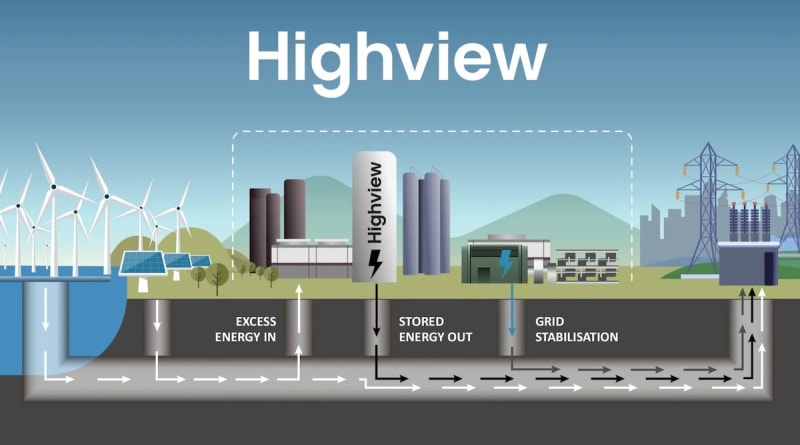
The China Green Development Investment Group has constructed a 60-megawatt facility in Golmud, Qinghai Province, that compresses air to ultra-low temperatures and stores it in atmospheric-pressure cryogenic tanks. Connected to a nearby 250-megawatt solar plant, the project represents a major leap forward in solving one of renewable energy's most persistent challenges: consistent power delivery when sunlight and wind are unavailable.
Unlike traditional lithium-ion batteries that typically provide only several hours of storage, this liquid air technology offers remarkable advantages. By cooling air to an astonishing -194 degrees Celsius, the system can compress and store energy with unprecedented efficiency. When electricity demand peaks, the stored liquid air is heated, expanding rapidly to drive turbines and generate electricity.
Collaborating with the Chinese Academy of Sciences' Technical Institute of Physics and Chemistry, engineers overcame significant engineering obstacles. They developed breakthrough ultra-low-temperature cascade technology and created an atmospheric-pressure storage system capable of maintaining consistent air pressure during energy release.
This innovation is particularly significant because current utility-scale energy storage in the United States relies overwhelmingly on pumped hydropower, which accounts for approximately 95% of total storage capacity. The liquid air alternative offers multiple advantages: longer operational lifespans, greater scalability, and a more domestically-sourced supply chain.
While the 60-megawatt facility is ambitious for a demonstration project, its potential is immense. By providing 10 hours of reliable, zero-emission electricity storage, this technology could be a game-changer for renewable energy infrastructure worldwide. As climate challenges intensify, such innovative solutions represent hope for a more sustainable global energy future.
Based on reporting by CleanTechnica
This story was written by BrightWire based on verified news reports.
Spread the positivity! 🌟
Share this good news with someone who needs it
More Good News
 🚀 Innovation
Oklahoma Startup Slashes Green Hydrogen Costs by 75% with Groundbreaking Technology
 🚀 Innovation
How China's Solar Panels Are Solving Africa's Energy Crisis
 🚀 Innovation