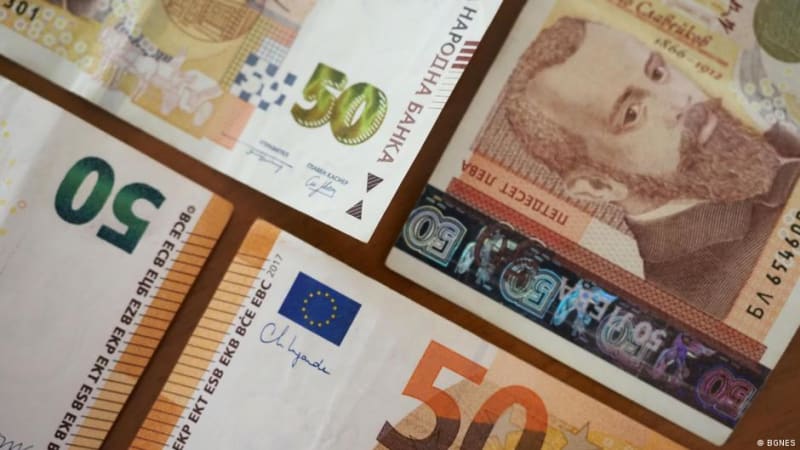
Bulgaria's Euro Leap: A Strategic Path to Economic Stability
Bulgaria prepares to join the eurozone in 2026, marking a significant economic milestone. The country's strategic transition promises enhanced economic stability and deeper European integration.
In a landmark moment for Eastern European economic development, Bulgaria is preparing to embrace the euro, marking its entry into the eurozone on January 1, 2026, as the currency bloc's 21st member state.
The nation's journey to this pivotal economic milestone represents years of careful fiscal planning and strategic positioning, transforming Bulgaria from a post-communist economy to a robust European Union participant. Having joined the EU in 2007, the country will now leave behind only six EU nations outside the currency union: Sweden, Poland, the Czech Republic, Hungary, Romania, and Denmark.
Bulgarian Prime Minister Rosen Zhelyazkov emphatically describes the euro adoption as 'not just a currency but a strategic choice' that will strengthen the nation's position within Europe. This sentiment is echoed by European Central Bank President Christine Lagarde, who highlighted that euro adoption will 'bolster Bulgaria's economic foundations, build resilience against global economic shocks, and amplify its voice in euro area decision-making'.
However, academic perspectives offer nuanced insights into the transition. Rossitsa Rangelova, a professor at the Bulgarian Academy of Sciences' Economic Research Institute, cautions against overly optimistic expectations. She argues that while supporters believe joining the 'club of the rich' will automatically increase prosperity, significant mandatory reforms are essential to ensure Bulgaria becomes an equal participant in the economic ecosystem.
The groundwork for this transition has been methodically laid over decades. Bulgaria's national currency, the lev, has been pegged to the euro since 1999, and the country formally began its eurozone integration process in 2018. By July 2020, the lev was included in the European Exchange Rate Mechanism, setting the stage for full membership.
Macroeconomic indicators paint an encouraging picture of Bulgaria's readiness. Inflation has dramatically stabilized from approximately 13% in 2022 to around 2.8% currently. Budget deficit and debt levels remain impressively low—around 3% and 24% respectively—comfortably meeting stringent EU fiscal requirements. The European Union projects robust economic growth, estimating real GDP increases of 3% this year, 2.7% in 2026, and 2.1% in 2027.
Economic experts like Guntram Wolff from the think tank Bruegel acknowledge Bulgaria's stable macroeconomic performance while noting that economic growth has been 'suboptimal'. Norbert Beckmann from the Konrad Adenauer Foundation emphasizes that while Bulgaria meets all eurozone convergence criteria and boasts one of Europe's lowest debt ratios, the country's income level remains at just 59% of the EU average.
Critically, experts warn against potential post-adoption fiscal complacency. Wolff cautions that political systems might perceive budget constraints as less binding after euro adoption, potentially leading to deficit growth. Beckmann similarly stresses the importance of maintaining economic discipline, drawing parallels to Greece's past economic challenges and emphasizing that incomes must authentically reflect economic capacity to prevent market distortions.
Based on reporting by DW News
This story was written by BrightWire based on verified news reports.
More Good News
 💡 Solutions
China Leads Diplomatic Efforts to Resolve Cambodia-Thailand Border Conflict
 💡 Solutions
South Korea's President Returns to Historic Presidential Palace, Symbolizing Democratic Renewal
 💡 Solutions
Trump Advocates for Peace: Bold Plan Targets Hamas Disarmament in Gaza
Start Your Day With Good News
Join 50,000+ readers who wake up to stories that inspire. Delivered fresh every morning.
No spam, ever. Unsubscribe anytime.