Bulgaria's Euro Journey: A Bold Step Towards Economic Stability
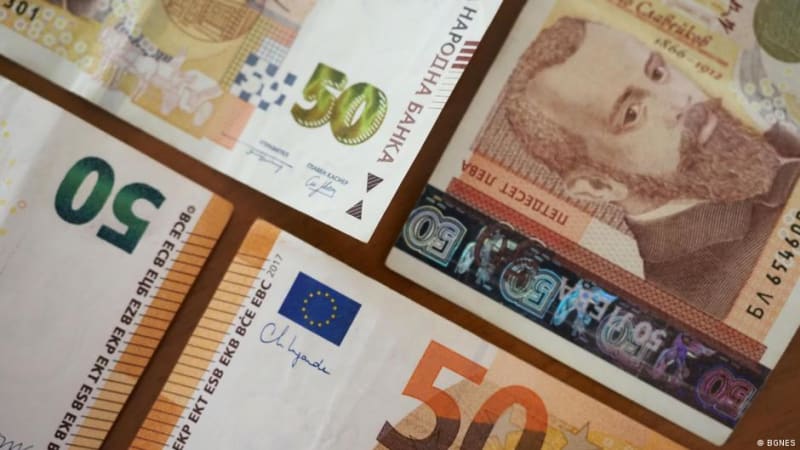
Bulgaria prepares to join the eurozone in 2026, marking a significant milestone in its economic development. The country's strategic euro adoption promises enhanced economic stability and deeper European integration.
In a landmark decision that signals significant economic progress, Bulgaria is set to embrace the euro as its official currency on January 1, 2026, becoming the 21st member of the eurozone and marking a transformative moment for the Eastern European nation.
The country's path to this milestone has been carefully charted since joining the European Union in 2007, with Bulgarian Prime Minister Rosen Zhelyazkov describing the euro as "not just a currency but a strategic choice" that will strengthen Bulgaria's position in Europe. Christine Lagarde, president of the European Central Bank, further emphasized that the euro adoption will "bolster Bulgaria's economic foundations, build its resilience against global shocks, and amplify its voice in euro area decision-making".
Bulgaria's economic journey reveals a story of steady improvement and strategic planning. The national currency, the lev, has been pegged to the euro since 1999, and the formal process of joining the currency bloc began in 2018. By July 2020, the lev was included in the European Exchange Rate Mechanism, setting the stage for full integration. The European Commission and euro area finance ministers have already approved Bulgaria's membership bid, recognizing the country's significant economic progress.
Macroeconomic indicators paint an optimistic picture of Bulgaria's readiness. Inflation has dramatically decreased from around 13% in 2022 to approximately 2.8% currently. The country's budget deficit and debt levels remain impressively low—around 3% and 24% respectively—comfortably meeting EU fiscal regulations that mandate deficits within 3% of economic output and total fiscal debt within 60% of GDP.
However, experts caution against unbridled optimism. Rossitsa Rangelova from the Bulgarian Academy of Sciences' Economic Research Institute warns that simply joining the "club of the rich" does not automatically guarantee increased prosperity. Guntram Wolff from the economic think tank Bruegel notes that while Bulgaria's macroeconomic performance has been stable, its economic growth has been "suboptimal".
Growth projections remain encouraging, with the EU estimating Bulgaria's real GDP will grow around 3% this year, 2.7% in 2026, and 2.1% in 2027. Norbert Beckmann from the Konrad Adenauer Foundation highlights that Bulgaria meets all convergence criteria, particularly noting its remarkably low debt ratio. Nevertheless, he points out that the country's income level remains at just 59% of the EU average.
Experts unanimously caution the Bulgarian government against potential fiscal complacency. Wolff warns of the risk that political systems might view budget constraints as less binding post-euro adoption, potentially leading to growing deficits. Beckmann emphasizes the critical importance of maintaining economic discipline, drawing parallels with Greece's past economic challenges and stressing that incomes must always reflect genuine economic capacity.
With this momentous step, Bulgaria will join 20 other eurozone nations, leaving only six EU countries outside the currency union: Sweden, Poland, the Czech Republic, Hungary, Romania, and Denmark. The nation's euro adoption represents not just a monetary transition, but a profound statement of economic ambition and European integration.
Based on reporting by DW News
This story was written by BrightWire based on verified news reports.
More Good News


Start Your Day With Good News
Join 50,000+ readers who wake up to stories that inspire. Delivered fresh every morning.
No spam, ever. Unsubscribe anytime.