Breakthrough Water Purification Technology Obliterates 'Forever Chemicals' with Revolutionary Speed
Researchers unveil a groundbreaking water purification technology that can capture and destroy 'forever chemicals' with unprecedented speed and efficiency. This eco-friendly method offers hope for cleaner water systems worldwide.
In a groundbreaking collaboration between researchers from Rice University and Korean scientific institutions, a revolutionary water purification technology has emerged that promises to tackle one of the most stubborn environmental challenges of our time: toxic 'forever chemicals' known as PFAS.
Scientists have developed an extraordinary layered double hydroxide (LDH) material composed of copper and aluminum that can capture and destroy PFAS chemicals with unprecedented efficiency—more than 1,000 times faster than current methods. This innovative approach addresses a critical environmental threat that has long plagued water systems worldwide, offering hope for cleaner, safer drinking water.
PFAS, synthetic chemicals first introduced in the 1940s, have been widely used in products ranging from non-stick cookware to waterproof clothing. Their remarkable resistance to heat, grease, and water made them industrially valuable, but this same resilience means they persist in environmental systems, potentially causing serious health risks including liver damage, reproductive disorders, and certain cancers.
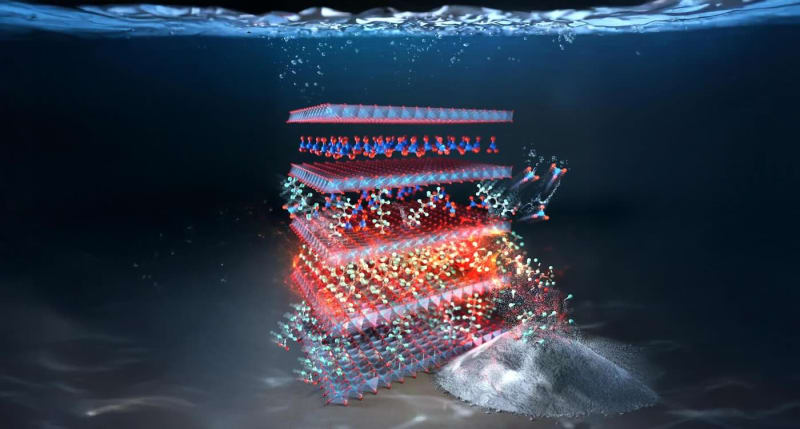
The breakthrough centers on a unique material developed by graduate student Youngkun Chung, working under Professor Michael Wong at Rice University. Their LDH compound with nitrate can adsorb PFAS with extraordinary speed, removing substantial chemical contamination within minutes—approximately 100 times faster than traditional carbon filters. The material's effectiveness stems from its intricate internal structure, where copper-aluminum layers create an ideal binding environment for PFAS molecules.
Critically, the researchers didn't just develop a capture method—they also created a sustainable destruction process. By heating the saturated material with calcium carbonate, they successfully eliminated over half of the trapped PFAS without generating toxic by-products. Even more impressively, the material can regenerate itself, completing at least six full cycles of capture, destruction, and renewal.
Extensive testing across diverse water sources—including river water, tap water, and wastewater—demonstrated the technology's remarkable versatility. The results, recently published in Advanced Materials journal, suggest enormous potential for large-scale implementation in municipal water treatment and industrial cleanup efforts.
Professor Wong emphasized the significance of this international collaboration, highlighting how the creativity of young researchers can drive transformative environmental solutions. 'We are excited by the potential of this one-of-a-kind LDH-based technology to revolutionize how PFAS-contaminated water sources are treated,' he stated, underscoring the hope this breakthrough represents for global water purification challenges.
Based on reporting by Good News Network
This story was written by BrightWire based on verified news reports.
More Good News
 🚀 Innovation
Electrifying Deal: Dodge Charger EV Slashes Prices by Nearly 50%
 🚀 Innovation
CATL's Sodium-Ion Battery Revolution: A Breakthrough in Electric Vehicle Technology
 🚀 Innovation
Home Tech Revolution: 5 Breakthrough Innovations That Are Changing Everyday Living
Start Your Day With Good News
Join 50,000+ readers who wake up to stories that inspire. Delivered fresh every morning.
No spam, ever. Unsubscribe anytime.