Breakthrough: Scientists Unlock Nature's Cancer-Fighting Molecular Secrets
Canadian researchers have decoded the molecular secrets of mitraphylline, a rare plant compound with cancer-fighting potential. This breakthrough promises sustainable new approaches to developing life-saving medicines.
In a groundbreaking discovery that bridges botanical science and pharmaceutical innovation, Canadian researchers have unraveled the complex molecular mechanism behind mitraphylline, a rare plant compound with extraordinary potential for cancer treatment and sustainable medicine.
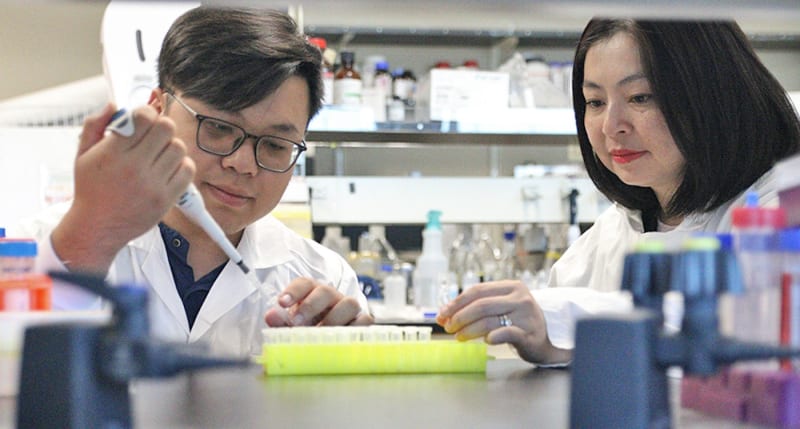
Scientists at the University of British Columbia-Okanagan have achieved what seemed impossible: decoding how plants naturally construct these intricate alkaloid molecules. Led by Dr. Thu-Thuy Dang, the research team pinpointed the first known plant enzyme capable of creating the distinctive 'spiro' shape found in these powerful molecular structures.
Doctoral student Tuan-Anh Nguyen played a crucial role in identifying two pivotal enzymes responsible for mitraphylline's creation. One enzyme precisely arranges the molecule's three-dimensional structure, while the second enzyme carefully twists it into its final form. Dr. Dang eloquently described this breakthrough as 'similar to finding the missing links in an assembly line,' solving a long-standing scientific mystery about nature's molecular construction techniques.
Mitraphylline presents a fascinating challenge for pharmaceutical research, as it exists only in trace amounts within tropical coffee trees like Mitragyna and Uncaria. Previously, extracting meaningful quantities of this compound was economically unfeasible. However, by identifying the specific enzymes that construct and shape mitraphylline, scientists have opened a pathway to more sustainable and scalable production methods.
The research represents a significant leap forward in 'green chemistry,' offering a revolutionary approach to accessing valuable pharmaceutical compounds. As Nguyen explained, this work emerged from UBC Okanagan's collaborative research environment, where students and faculty unite to address global scientific challenges. The team's collaborative efforts extended to researchers at the University of Florida, further expanding the project's interdisciplinary scope.
Dr. Dang passionately emphasized plants' incredible chemical capabilities, stating, 'Plants are fantastic natural chemists.' The team's next steps involve adapting these molecular tools to potentially create an even broader range of therapeutic compounds, promising exciting future developments in medical research and natural product biotechnology.
Based on reporting by Good News Network
This story was written by BrightWire based on verified news reports.
More Good News
 🚀 Innovation
Skywatchers Rejoice: Northern Lights Set to Illuminate UK Skies in 2026
 🚀 Innovation
From Shadows to Spotlight: How Mezcal Became Mexico's Liquid Gold
 🚀 Innovation
Renault's Filante Record 2025: A Groundbreaking Journey into Electric Vehicle Efficiency
Start Your Day With Good News
Join 50,000+ readers who wake up to stories that inspire. Delivered fresh every morning.
No spam, ever. Unsubscribe anytime.