Ancient Armenian Wagon Reveals Bronze Age Engineering Marvel: A 3,500-Year-Old Journey to the Afterlife
A 3,500-year-old Armenian wagon reveals the extraordinary engineering and spiritual practices of Bronze Age civilization. This meticulously crafted vehicle offers a remarkable window into ancient technological sophistication and cultural beliefs.
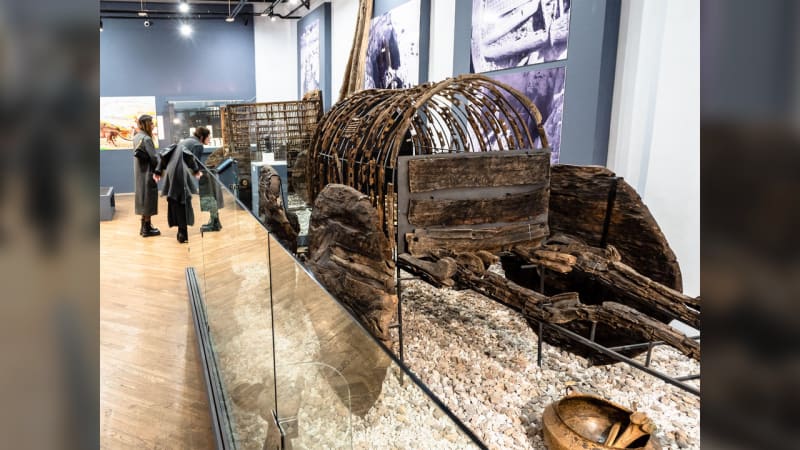
In the serene landscapes of Armenia, archaeologists have uncovered a remarkable testament to human ingenuity: a meticulously crafted wooden wagon that offers a profound glimpse into Bronze Age funeral practices and technological sophistication. Discovered near Lake Sevan during Soviet-era construction, the Lchashen wagon represents one of the most extraordinary archaeological finds of the 20th century.
Dating back to approximately 1500 B.C., this extraordinary vehicle was not merely a mode of transportation, but a sacred vessel designed to carry a deceased chief into the spiritual realm. Excavated from an elite cemetery containing over 500 burials, the wagon stands as a remarkable example of advanced woodworking and cultural complexity during the Late Bronze Age.
Constructed from oak and comprising at least 70 intricate parts, the wagon showcases extraordinary craftsmanship that would challenge even modern woodworkers. Each wooden wheel measured an impressive 63 inches tall, carefully joined using a sophisticated mortise-and-tenon system with precise bronze fittings. Archaeologist Stuart Piggott noted the incredible complexity, observing that the canopy frame alone required approximately 600 precisely drilled mortise holes.
Measuring approximately 6.5 feet in length, the Lchashen wagon represents more than just a technological artifact—it's a window into ancient Armenian society's spiritual beliefs and engineering capabilities. While some researchers have claimed it as the 'oldest wagon in the world,' archaeological evidence suggests wheeled vehicles existed in Mesopotamia as early as 4500-3300 B.C. during the Copper Age.
The wagon's discovery emerged from an unexpected source: Soviet-era construction workers draining part of Lake Sevan for irrigation purposes. Their work revealed not just this extraordinary vehicle, but an entire necropolis rich with cultural artifacts, including bronze war chariot models and multiple two- and four-wheeled wagons.
Historians and archaeologists continue to debate the precise origins of this technological marvel. Whether the innovation emerged from Armenia itself, migrated from Mesopotamia, or traveled from the Russian steppe remains an open question. What remains clear is the remarkable sophistication of Bronze Age engineering and the deep cultural significance attached to funeral practices.
Today, this extraordinary artifact resides in the History Museum of Armenia in Yerevan, serving as a powerful reminder of human creativity, spiritual complexity, and technological advancement millennia before our modern era. The Lchashen wagon stands not just as an archaeological specimen, but as a profound testament to humanity's enduring desire to honor and remember those who came before us.
Based on reporting by Live Science
This story was written by BrightWire based on verified news reports.
More Good News
 🚀 Innovation
Scientific Breakthroughs Unravel Ancient Human Stories Through DNA and Preservation
 🚀 Innovation
Chinese Car Brands Rev Up: One in Ten UK Cars to Be Made in China by 2025
 🚀 Innovation