AI Dreams: How Ancient Myths Reveal Our Timeless Quest for Artificial Intelligence
Exploring the profound connections between ancient mythology and modern AI technology reveals a timeless human quest to create intelligent life. This journey transcends mere technological innovation, representing our deepest aspirations to understand and potentially replicate consciousness.
The current artificial intelligence boom feels hauntingly familiar - another technological fever dream reminiscent of past investment bubbles that have swept through human history. Just as the dot-com era saw investors frantically pouring billions into any website with a ".com" suffix, today's marketplace is awash with venture capital targeting anything bearing the "AI" label.
However, a crucial distinction exists between previous technological waves and the current AI landscape: while the World Wide Web was a tangible, existing technology, general Artificial Intelligence remains more myth than reality. OpenAI's own CEO, Sam Altman, candidly acknowledged in February that their latest systems are merely "pointing towards" AI in its most general sense - statistical data processors rather than true intelligences comparable to human cognition.
The persistent allure of AI might stem from something far deeper than technological potential: a mythological narrative deeply embedded in Western cultural imagination. The most profound parallel can be found in the ancient Greek myth of Prometheus, a foundational story about humanity's audacious quest to harness divine creative powers.
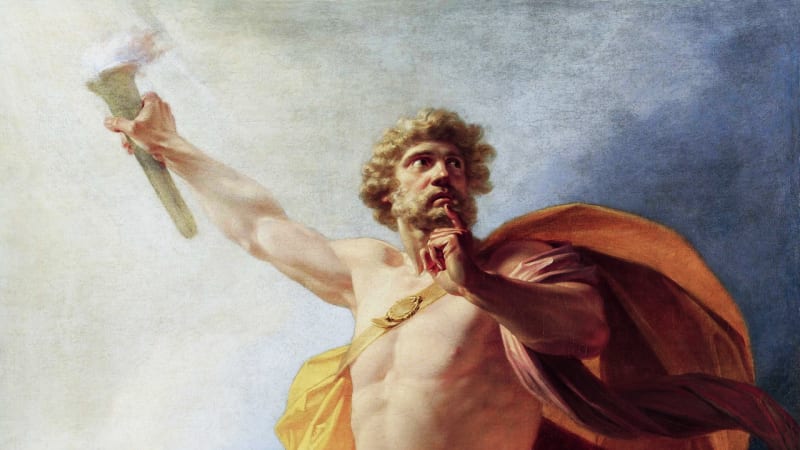
In Greek mythology, Prometheus was a Titan who stole fire from the gods, specifically from Hephaestus, and gifted it to humans. This wasn't merely a physical gift of flame, but a metaphorical bestowal of intelligence. According to the play Prometheus Bound, before his intervention, humans existed in a state of sensory ignorance - seeing without truly perceiving, hearing without comprehension.
Historian Adrienne Mayor's groundbreaking work Gods and Robots reveals that ancient Greeks frequently conceptualized humans as a form of artificial intelligence. Prometheus and Hephaestus were portrayed as craftsmen who could manufacture beings using technological innovation, a concept remarkably prescient of modern AI aspirations.
The myth suggests a profound philosophical question: if divine beings can create intelligent life, might humans not also possess that transformative potential? Greek literature is replete with stories of extraordinary creators - from Daedalus, who constructed living statues, to Medea, who manipulated life's fundamental processes through her sophisticated knowledge.
Today's AI investors might unconsciously be participating in this age-old narrative of technological transcendence. By funding AI research, they're not just backing a potential market opportunity, but symbolically continuing humanity's eternal dream of creating intelligence that mirrors - and perhaps someday surpasses - our own cognitive capabilities.
As we stand at the precipice of potentially revolutionary technological developments, it's worth remembering that our current AI excitement is part of a much longer human story - one of imagination, ambition, and the perpetual desire to understand and replicate the mysterious mechanisms of intelligence itself.
Based on reporting by Live Science
This story was written by BrightWire based on verified news reports.